
Making Lighting Smarter Without Breaking the Switches
An incremental lighting plan built around keeping the controls people already use.
All I wanted was…
to turn off the lights from bed.
Then it escalated quickly.
That is still the real requirement. The clever part is not making a light respond to an app; it is gaining remote and automated control without making the wall switch worse for everyone else in the house.
The real requirement
Lighting is where a home platform can become fragile quickly: multiple ecosystems, existing dimmers and household expectations all meet at the same switch. The aim was to make lighting better without making it worse for anyone who just wants the light on.
What I kept
Home Assistant brings together the existing lighting integrations, including Tuya, with room-based controls. The three legacy dimmers originally used the SUPLA/vendor-cloud route, then moved to the home's own local control path. Their normal control no longer needs the original vendor account or subscription in the middle.
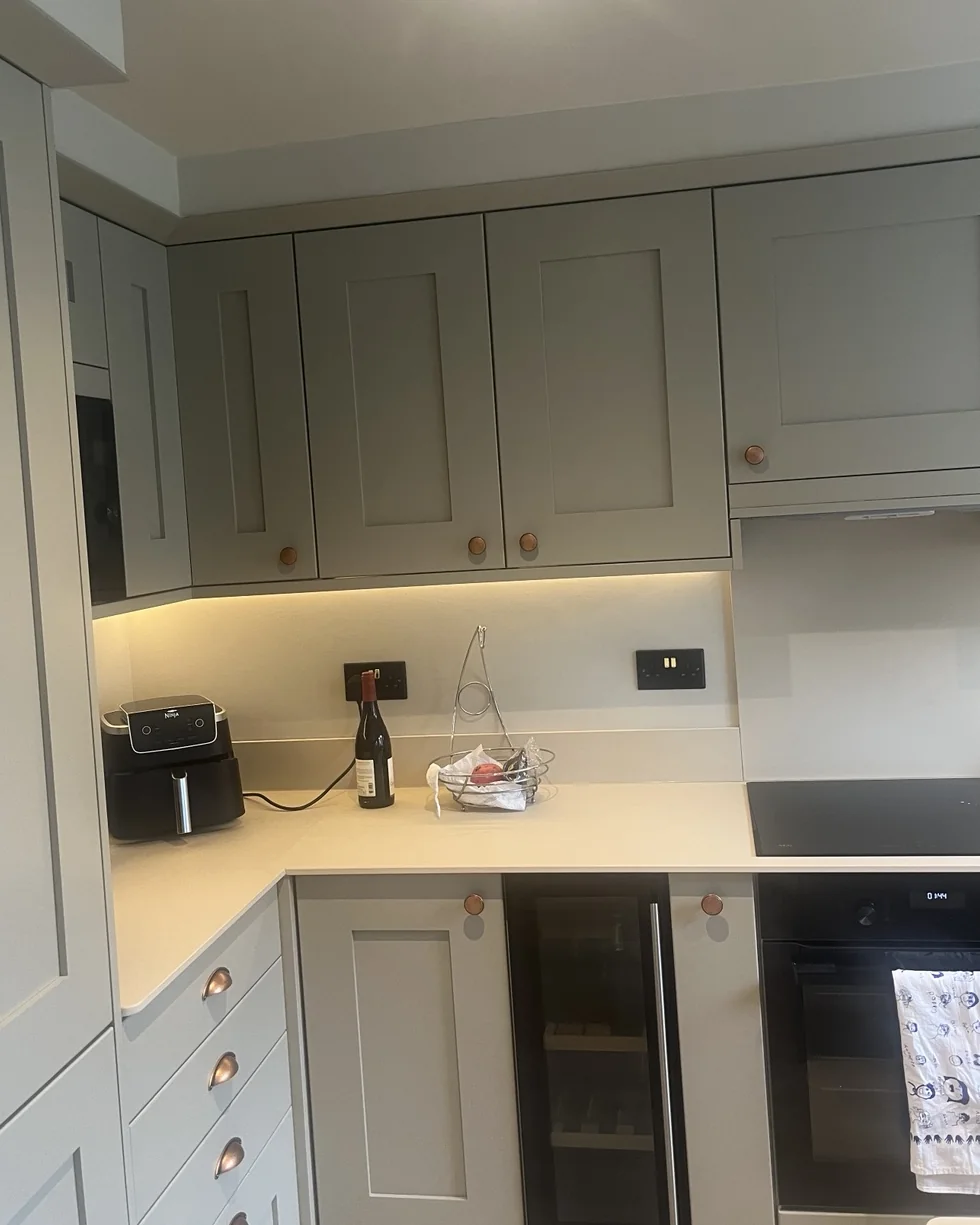
I checked the local controls for on, off and brightness behaviour, including watching the lights themselves. They work as intended without turning every room and ecosystem into the same project.
The hardware I used
A MOES Zigbee gateway was bought for £29.99, and a SONOFF Zigbee dimmer switch for £22.68. Both are deployed. The SONOFF hardware serves the pendant and COB/worktop lighting; the MOES hub provides the Zigbee bridge. They are useful examples of choosing ordinary, low-cost control hardware rather than a proprietary lighting overhaul.
The same purchase history includes two V-PRO Smart Master Wi-Fi LED dimmers in the Vogue Matt Black/Brass finish: a single-gang VLJYSM101VMB at £32.35 and a two-gang VLJYSM102VMB at £59.10. Together they serve the Kitchen and Living Room ceiling lights. I do not have a room-by-room SKU map, so I will not invent one.
The manual-control test
Not every automation earns its place. The blinds are still manual because the person using them prefers the string and has vetoed automating them. That is a better acceptance test than a technically successful demo: an automation has to beat the control people already like.
What changed
The old SUPLA/vendor-cloud setup is part of the story, not the current design. The local replacement is deliberately described at a high level here; account, routing and access details do not belong in a public article.
Where it stands
Local control is now the arrangement for those three dimmers. Beyond that, I am keeping the sensible rule that existing controls stay until there is a clear reason to replace them.
The rule
Lighting integrations succeed when they respect the installed system. Keep the working path, try one circuit at a time and do not claim whole-house cleverness from one successful test.