
Making My Smiths Fan Convectors Smart
How two legacy fan convectors went from separate controls to a fully deployed Home Assistant and Nest heating integration.
All I wanted was…
to control my heater remotely.
Then it escalated quickly.
The requirement really was that small. The heaters already worked; replacing them would have been wasteful. I just wanted them to participate in the same local control system as the rest of the house. That modest request eventually involved radio observation, an ESP32, a CC1101, MQTT and a Home Assistant integration.
What I had
I had two Smiths VE2500 fan convectors with useful local controls, but no supported modern interface for the rest of the home. They heated rooms well enough on their own; they simply sat outside the controls and visibility that were already useful elsewhere in Home Assistant.
What annoyed me
The awkward part was not making another dashboard tile. It was that the heating system had separate pieces of reality: the thermostat could decide that heat was needed, the fan convectors could provide it, and neither system had a sensible way to work together. Replacing working equipment would have been wasteful; leaving it disconnected made the wider heating setup less useful.
How I worked it out
I started by observing the legacy controls rather than trying to drive them straight away. Once I understood enough to move on, I tested the controller and physical ON/OFF behaviour under supervision.
Each stage answered one question at a time: would the controller keep running, could Home Assistant issue the command, and did the physical heater respond? A successful command was not treated as proof that the fan convector had changed state; I still checked the heater itself.
Those stages are the history of the work, not its current status.
What I built
The finished integration uses an ESP32 and CC1101 control path behind existing Home Assistant heater controls. The two fan convectors are now part of the normal Home Assistant environment rather than a separate manual island.
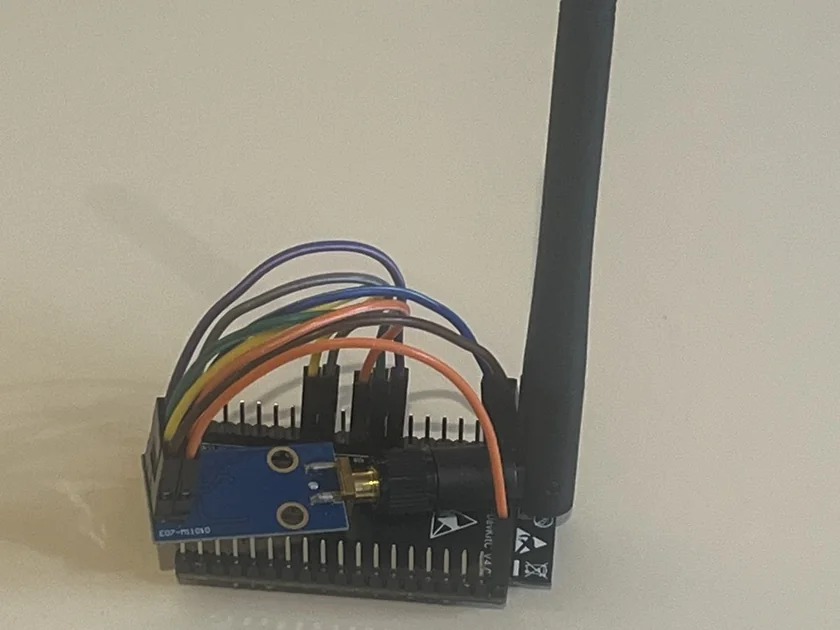
The publication-safe implementation is now available in the public Smith's RF bridge for Home Assistant repository. It includes the ESP32/CC1101 reference firmware, Home Assistant and MQTT examples, protocol notes, test results and the reproduction/adaptation workflow. The public firmware deliberately uses inert waveform templates: another owner must capture and insert their own controller-specific data. Raw captures, installation-specific identifiers and private engineering evidence stay out of the public repository.
The important bit is still simpler: Home Assistant is the control surface, while the small local controller deals with the legacy equipment behind it.
How it works today
This integration is fully deployed. Both Smiths VE2500 fan convectors can be controlled from Home Assistant, and the Nest-to-Smiths automation is live as part of the heating setup.
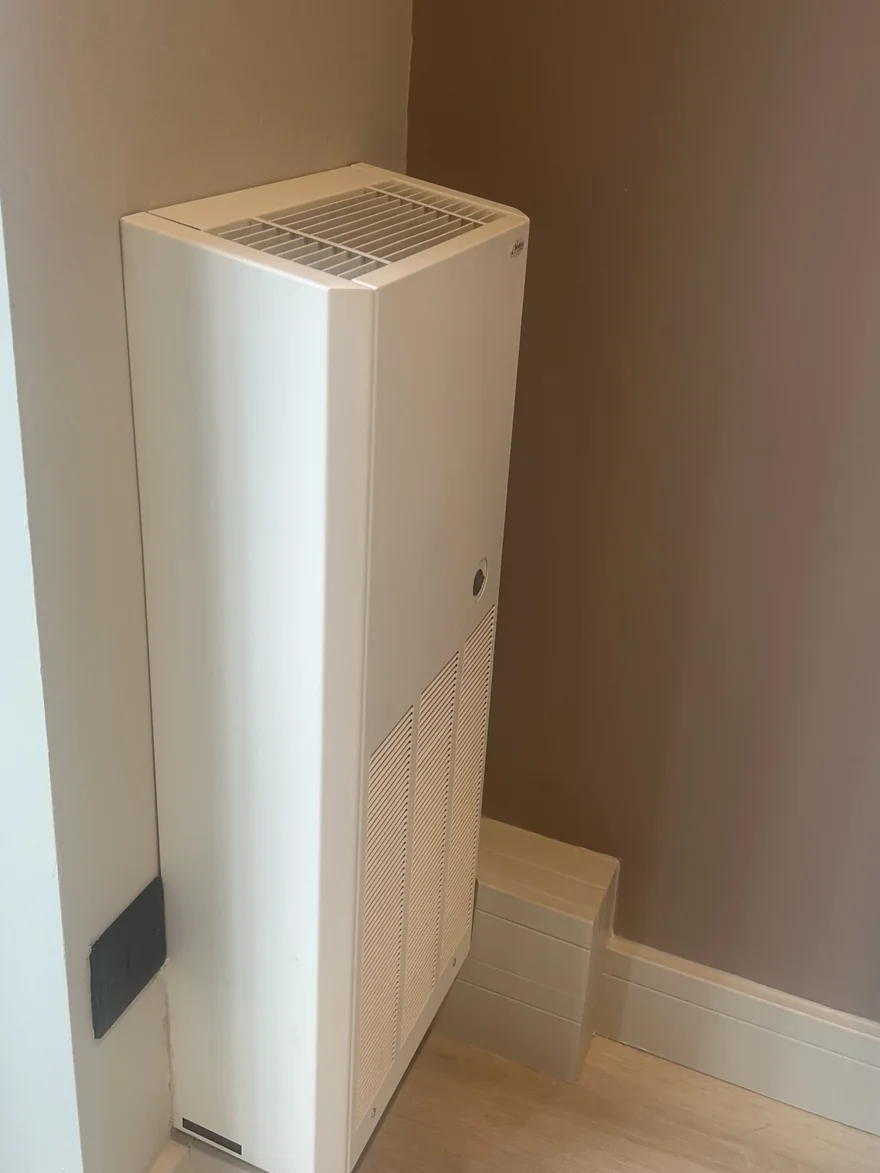
The automation uses the thermostat's heat-demand state rather than its broad HVAC mode. Active heat demand turns the Smiths controls on; the end of demand turns them off. Unexpected or unavailable thermostat values do nothing.
The Home Assistant controls show the command path, not independent physical feedback. That distinction still matters in a deployed system: a switch tile is useful, but it is not a camera pointed at the heater.
What I learned
The most important lesson was to keep the stages separate. An early observation, a physical test and a working home automation are not the same thing. The project got to deployment because I treated them as different questions, rather than declaring victory after the first experiment.
Small hardware, narrow job
The controller work used an ESP32 development board and a CC1101 module, with an RTL-SDR receiver used during the earlier receive-only investigation. The ESP32 and CC1101 are now part of the deployed Smiths integration. I paid £8.01 for the ESP32 board, £2.07 for the CC1101 module and £1.53 for a pack of connecting leads.
The development history matters, but radio configuration and protocol detail stay private.
The useful lesson is not “buy this kit”. It is that inexpensive development hardware can solve a real-world problem when the work has clear stop points, physical checks and a sensible route from test to deployment.